

Desperation and Anger Mount in Flood-Stricken Bangladesh as Residents Blame India for Disaster
In Feni, a city in southeast Bangladesh, hundreds of people wade through chest-deep muddy floodwaters, clutching their belongings above their heads, as they attempt to reach safety. The city, home to nearly 1.5 million residents, has become the epicenter of one of the worst floods in the country’s history. Since Wednesday night, water has inundated 11 districts, submerging vast areas.
Bangladesh, a country that relies heavily on its rivers and waterways for fishing and rice farming, is no stranger to flooding and cyclones. However, this flood caught the people of Feni by surprise, and many are directing their anger at neighboring India. Residents accuse Indian officials of releasing water from the Dumbur dam in Tripura state without warning, a move they believe exacerbated the flood.
Shoriful Islam, a 29-year-old IT worker who returned to Feni from Dhaka to assist in rescue efforts, expressed the frustrations of many. “They opened the gate, but no information was given,” he said, blaming India for the disaster. The flood has left nearly 5 million people in Bangladesh affected, with at least 18 confirmed dead—a toll expected to rise as the waters recede.
India has denied any deliberate release of water, citing excessive rainfall and technical failures that led to a lack of communication with downstream neighbors. However, tensions are high, with Bangladeshis accusing India of using water as a “weapon” in a possible political retaliation following the ousting of Bangladesh’s long-time Prime Minister Sheikh Hasina.
Rescue operations in Feni are fraught with challenges, including a near-total communications blackout, lack of electricity, and impassable roads. The only way in and out of the flood zone is by boat, and volunteers are working tirelessly to deliver aid and evacuate stranded residents.
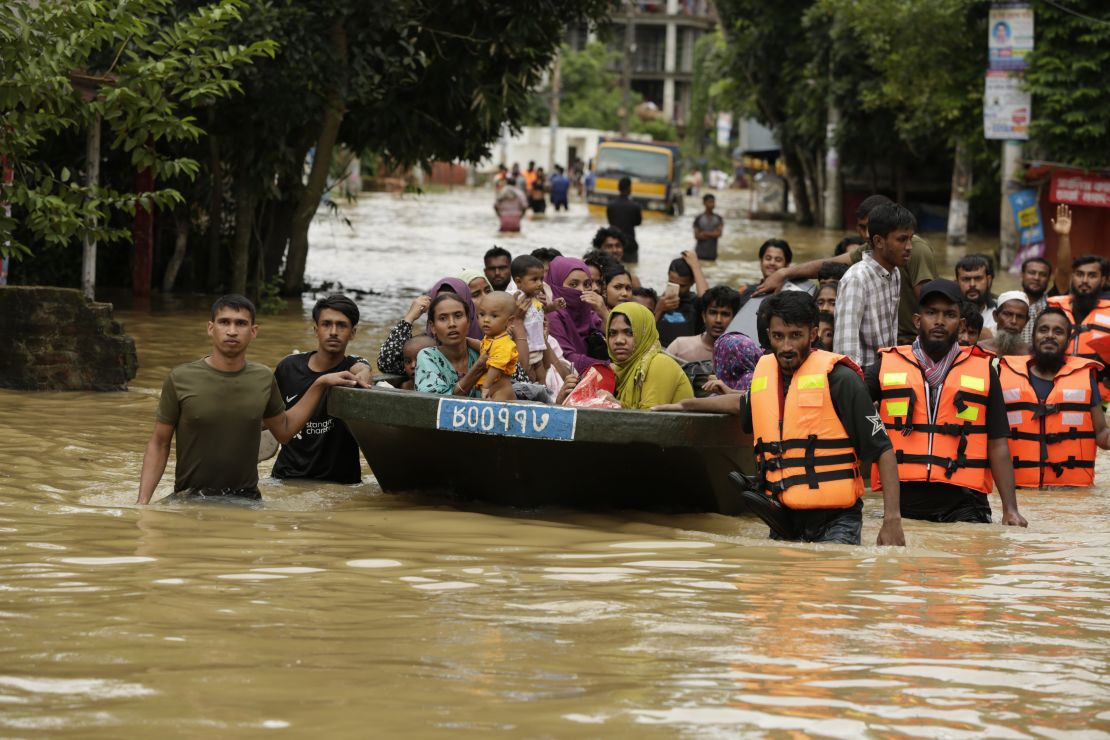
Despite the difficulties, the local and international community’s efforts have been significant. The army and navy have been mobilized, and volunteers from across the country have joined the rescue missions. Yet, many people remain trapped in remote areas, cut off from help.
Yasin Arafat, a 24-year-old from Dhaka, arrived in Feni to rescue his family, but he has been unable to find a boat to reach them. “They have no water, no food, and they’re very scared,” he said, his voice filled with worry.
As night falls, the rescue operations continue, with the hope that those stranded will survive long enough for help to arrive or for the floodwaters to recede. The people of Feni are left waiting, desperate for relief and angry at what they perceive as an avoidable disaster.